Brakes are the one repair almost nobody argues about, which is exactly why they are so easy to overcharge for. A driver hears a noise, books the car in, and accepts whatever number comes back because the alternative feels unthinkable. Knowing roughly what a brake pad replacement cost should look like, and what the noise is actually telling you, turns that conversation into a normal one.
What brake pad replacement cost really depends on
For a common family car at an independent garage, pads on one axle typically land somewhere between 150 and 300 in most markets, parts and labour together. Add rotors and the figure roughly doubles, because the discs themselves cost more than the pads and the job takes longer. A brake pad and rotor replacement cost of 400 to 700 per axle is normal rather than outrageous on a mainstream vehicle.
Three things move the number. The car, first: performance models and large SUVs use bigger, more expensive components, and some European models require an electronic parking brake to be retracted with a diagnostic tool, which adds labour. The parts, second: the gap between budget and original equipment pads is real and shows up as noise, dust and how quickly the rotors wear. The shop, third, because labour rates at a franchised dealer commonly run half again what an independent charges for identical work. Looking at car repair costs by brand makes the pattern obvious: much of what you will pay over a decade is decided the day you buy the car, not the day you fix it.
When to replace brakes, and when not to
Pad friction material starts around 10 to 12 millimetres and is considered finished at about 3. Most garages will recommend replacement at 3 to 4, which is fair. A recommendation at 6 or 7 millimetres is not urgent, and it is reasonable to ask how many millimetres are left rather than accepting a red entry on a checklist.
The symptoms that genuinely mean now rather than later are a pedal that travels further than it used to, a pedal that feels spongy, a car that pulls to one side under braking, or a grinding sound. Grinding usually means the friction material is gone and metal is contacting the rotor, which converts a pad job into a pad and rotor job in a few hundred miles of driving.
How to fix squeaky brakes without replacing anything
Not every noise is a warning. A light squeal on the first few stops of a damp morning is surface rust burning off the rotors and clears within a mile. Some pad compounds, particularly harder ceramic ones, squeal when cold and go quiet warm. If the noise disappears once the brakes are up to temperature and the pedal feels normal, nothing is wrong.
The common mechanical causes are also cheap to address. Glazed pads from long gentle braking can often be scuffed and bedded in again. Missing or dried out shims and anti-rattle clips let the pad vibrate against the caliper, and a small amount of the correct high temperature grease on the pad backing plate and slider pins usually silences it. What does not work is spraying anything onto the friction surface. If the sound is a rhythmic scrape that changes with wheel speed, or a metallic grind, stop diagnosing and book the car in.
Pads, rotors and the mechanics of stopping
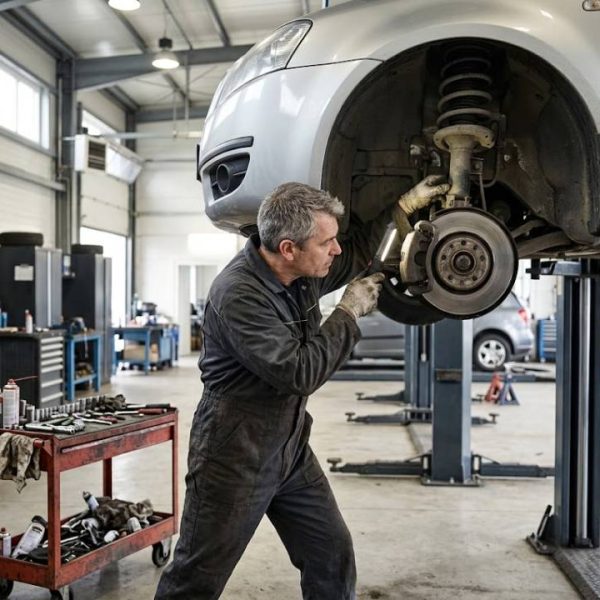
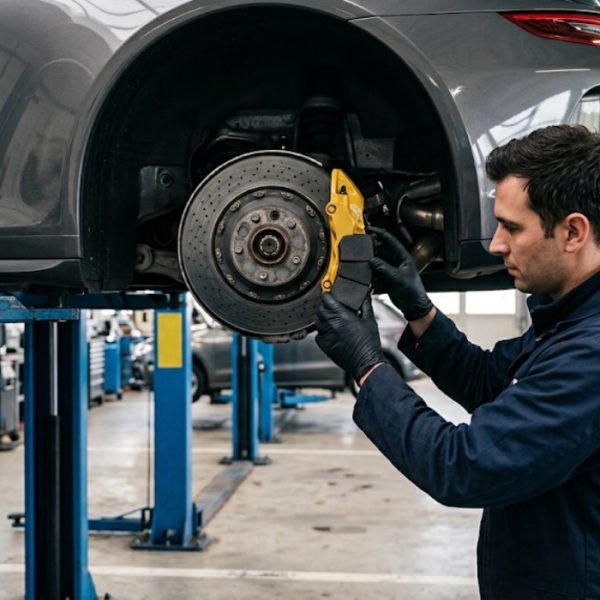
Understanding the parts makes the quote readable. A caliper squeezes two pads against a spinning disc brake rotor, and the friction converts the car's momentum into heat. Pads are consumable and designed to wear. Rotors wear too, more slowly, and have a minimum thickness stamped on them. Below that they cannot shed heat safely and must be replaced rather than machined.
Comparing quotes for any skilled job is difficult when you cannot evaluate the work itself. People fall back on price because it is the only number they understand. The same trap catches anyone about to hire a translator for the first time.
This is why a quote that lists pads only is sometimes right and sometimes optimistic. Ask for the measured rotor thickness against the stamped minimum. A shop that can give you both numbers without hesitating is a shop worth using. Owner communities such as the MechanicAdvice community are useful for sanity checking a quote on a specific model, though they are no substitute for someone physically looking at the car.
Manuals, software and the imported car problem
One quiet complication on imported vehicles is documentation. Torque figures, bleeding sequences and electronic parking brake procedures come from manufacturer service literature that has been translated, and safety critical instructions do not tolerate approximation. A specification rendered loosely in a hurried translation can put a caliper bolt at the wrong torque. Anyone tempted to run a foreign language service manual through a chatbot should read this assessment of how accurate AI translation really is before trusting the output on a braking system.
Getting a fair quote
Ask for the quote split into parts and labour, ask which brand of pad is being fitted, and ask whether rotors are included or extra. Get a second number from an independent garage if the first came from a dealer. Keep the old parts if you want to see the wear for yourself, which you are entitled to ask for. Brakes are not the place to buy the cheapest option available, but they are also not the place to accept a number nobody will explain.