Your car's suspension does a lot of quiet work. It keeps the tyres in contact with the road, absorbs bumps, controls body roll in corners and helps the brakes do their job. Because it wears gradually, many drivers do not notice problems until they become expensive.
Learning to spot the early warning signs can save money and, more importantly, keep you safe. A worn suspension does not only feel uncomfortable, it can increase braking distances and reduce control in an emergency.
Sign One: The Car Keeps Bouncing
Drive over a speed bump and pay attention. A healthy suspension settles almost immediately. If the car keeps bouncing two or three times, the shock absorbers or struts are likely worn. You can also try the classic bounce test: push down hard on one corner of the parked car and release. More than one rebound suggests a problem.
Sign Two: Nose Dives When Braking
When you brake firmly, the front of the car naturally dips a little. If it plunges noticeably, or the rear lifts sharply, worn dampers may be to blame. This is more than a comfort issue, because weight transfer affects how much grip the tyres have.
Sign Three: Pulling to One Side
A car that drifts left or right on a straight road may have an alignment problem, but damaged suspension components such as control arms, bushings or ball joints can also cause it. Uneven tyre pressure is the first thing to check. If pressures are fine, a professional inspection is the next step.
Sign Four: Clunks, Knocks and Squeaks
Noises are often the earliest clue. Listen for:
- A clunk when driving over potholes, often a sign of worn bushings or links.
- A knocking sound when turning, which can point to ball joints or CV joints.
- Squeaking over bumps, frequently caused by dry or worn rubber components.
- Rattling from one corner, sometimes a broken coil spring.
Sign Five: Uneven Tyre Wear
Run your hand across the tread. Scalloped patches, known as cupping, or wear concentrated on the inner or outer edge, often indicate suspension or alignment issues. Replacing tyres without fixing the cause simply means wearing out a new set faster.
Sign Six: The Car Sits Lower on One Corner
Park on level ground and look at the car from a few metres away. If one corner sits visibly lower, a spring may be broken or sagging. This affects handling, headlight aim and even the way the car brakes.
Why Suspension Problems Matter for Safety
Road safety authorities consistently highlight the role of well-maintained vehicles in preventing crashes. The National Highway Traffic Safety Administration publishes guidance and recall information that every car owner should check regularly. Worn suspension components can also be part of safety recalls, which are repaired free of charge by manufacturers.
What a Professional Inspection Includes
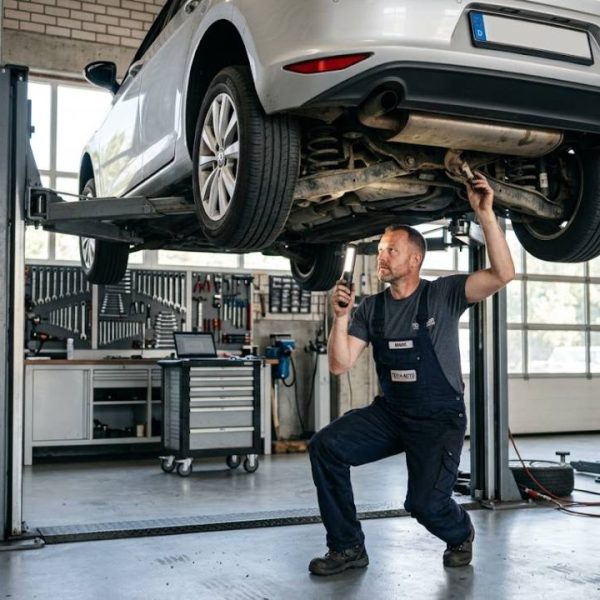
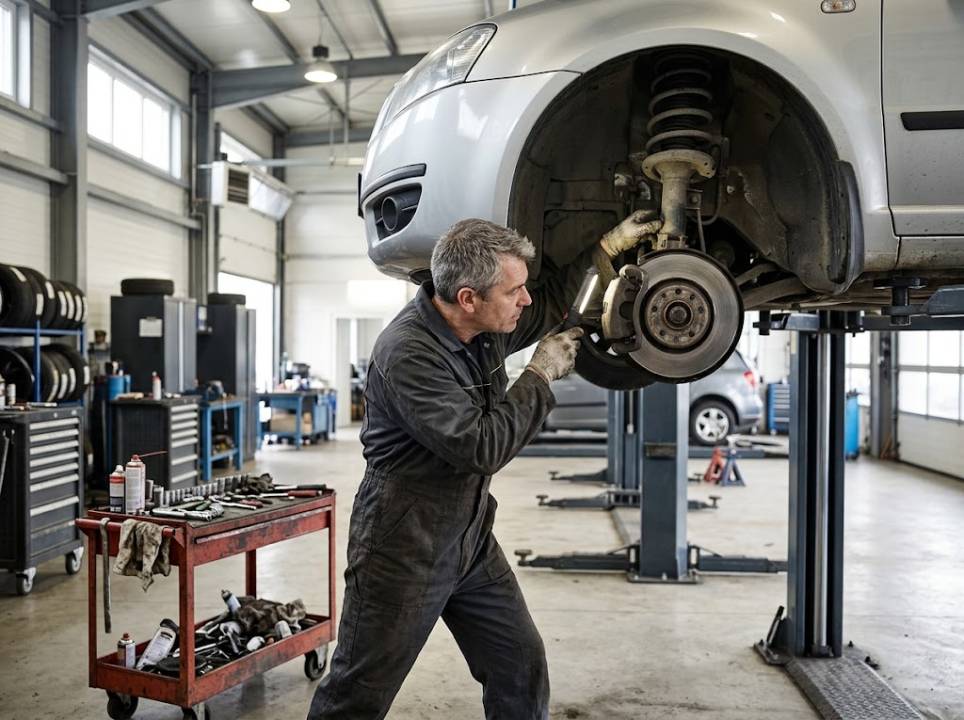
A good repair shop will lift the car and check shock absorbers for leaks, inspect springs for cracks, test ball joints and tie rod ends for play, examine bushings for tears and measure wheel alignment. Many workshops also take the car on a short test drive to reproduce the noise or handling issue you described.
Repair Manuals and the Language Challenge
Modern vehicles are built with components from all over the world, and service documentation often starts life in another language. Many premium cars come from German manufacturers, and their workshop manuals, torque specifications and technical bulletins are originally written in German.
Independent garages and parts distributors increasingly rely on german to english translation services for technical documents, because a mistranslated torque value or assembly step is not a small mistake. It can lead to failed repairs or unsafe vehicles.
Large parts suppliers and repair networks deal with thousands of similar sentences across manuals and catalogues. Technical writers and translators use translation memory software to reuse approved wording, so the same warning or procedure reads identically in every document. A dedicated cat translation tool also lets translators check part numbers and terminology against a shared glossary while they work.
How Much Does Suspension Repair Cost?
Costs vary widely depending on the vehicle and the part. Replacing a pair of shock absorbers is usually the biggest common job, while bushings, links and springs are cheaper individually. Parts should generally be replaced in pairs on the same axle to keep the car balanced.
If the bill is higher than expected, ask whether the repair shop offers flexible financing. Many workshops now let customers spread the cost over several months, which can make an urgent safety repair easier to manage.
Tips to Make Your Suspension Last Longer
- Slow down for potholes and speed bumps.
- Avoid overloading the car beyond its rated capacity.
- Keep tyres correctly inflated.
- Have alignment checked after hitting a kerb hard.
- Ask for a suspension check at every annual service.
Do Not Wait Too Long
Suspension problems rarely fix themselves. A small clunk today can become a failed ball joint tomorrow. If you notice any of the signs above, book an inspection with a trusted repair shop. Acting early usually means a cheaper repair, a smoother ride and a safer car for everyone on board.